


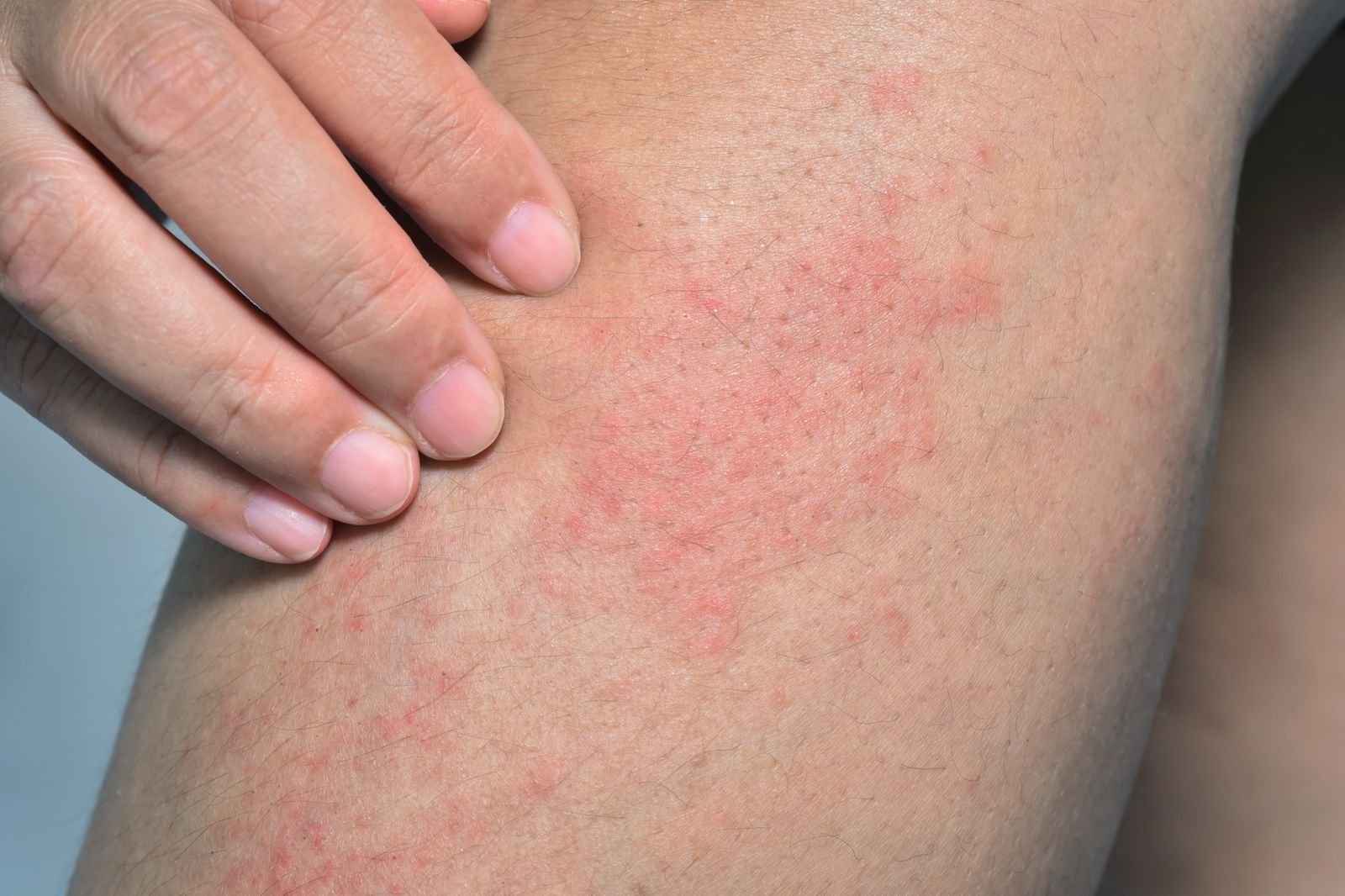
Every summer, it's the same story. Small red bumps across the chest, back or backs of the knees. Itchy enough to keep you up at night, and stubborn enough to still be there three days later. Most of us blame the heat and reach for another layer of aftersun, hoping it settles down by morning. But heat is only half the picture. Prickly heat isn't really about how hot it's been. It's about what's been sitting on your skin while you've been out enjoying it.
What is prickly heat, actually?
Prickly heat, or miliaria, happens when sweat ducts get blocked. Your body is trying to cool itself down the way it always does, by producing sweat and pushing it to the surface where it can evaporate. But if the duct is covered over, that sweat has nowhere to go. It pools just beneath the skin instead, and the result is those small, sore, maddeningly itchy bumps. Here's the part that surprises people: the blockage usually isn't caused by sun exposure at all. It's caused by what's covering the duct. Dead skin cells that haven't been shed properly. A build-up of sweat and salt from a long day outdoors. And, more often than people realise, SPF that's been reapplied several times without ever being fully removed. This is why someone who's careful with sun cream, someone who never actually burns, can still end up covered in prickly heat by the end of a heatwave.
The sun didn't do it. Blocked pores did. It also explains who tends to get it worst. People exercising or working outdoors in the heat, anyone in a humid climate where sweat can't evaporate easily, and anyone wearing tight, synthetic clothing that traps moisture against the skin. Babies are prone to it too, since their sweat ducts aren't fully developed. The common thread isn't how much sun any of these groups are getting. It's how much is sitting on the skin, unable to get away.
Dead skin, sweat and stubborn SPF
Modern sun creams are designed to stay put. That's rather the point of them, they need to survive swimming, sweating and hours in direct sun without wearing off. But that same resilience means SPF can sit on the skin for far longer than most people assume, especially once you've reapplied it two or three times over a day at the beach or in the garden. Layer that SPF on top of a day's sweat, add in the dead skin cells your body sheds constantly, and you've got exactly the kind of build-up that clogs sweat ducts.
Cleansing properly, both morning and evening, is what keeps that pathway clear. Not harsh scrubbing, which can irritate already sun-warmed skin, but a gentle, thorough cleanse that actually lifts everything away rather than pushing it around. This is where a proper body cleanse earns its place in a summer routine, not as an extra step, but as the step that prevents the problem in the first place.
An oil-based cleanser tends to do this better than a foaming wash. Foam works by stripping oil from the skin, which is precisely what SPF and sweat are designed to resist, so a lot gets left behind. Oil, on the other hand, binds to oil. It dissolves SPF, sunscreen residue and sebum on contact, then lifts away with a warm cloth rather than being rinsed and hoped away. For skin that's already had a full day of sun, that's a far gentler way to get properly clean.
Wake your skin up before SPF
Start the day by massaging the Moisturising Body Oil Wash onto completely dry skin, then remove it with a warm, damp cloth (a muslin cloth comes included with the bottle, so there's nothing extra to buy). Working an oil into dry skin sounds counterintuitive if you've spent years using foaming washes, but it's a far gentler way to clear away overnight build-up, dead skin cells and any sweat from the night before.
As the oil is worked in, it softens and lifts everything that's settled on the surface. Wiping it away with a warm cloth takes all of that with it, leaving pores genuinely clear rather than just rinsed over. That matters more in summer than any other time of year. Skin that's properly prepped absorbs SPF better and gives it a clean surface to sit on, rather than applying sun cream over yesterday's residue.
Remove SPF before you shower
The habit that makes the biggest difference is the one most people skip: properly removing SPF at the end of the day, before you shower.
After a day in the sun, massage the Moisturising Body Oil Wash onto dry skin again, exactly as you did that morning, then wipe it away with a warm, damp cloth. You'll likely see the results on the cloth itself, a visible reminder of just how much SPF, salt, chlorine and everyday grime had been sitting on your skin. Then step into the shower as normal. Any oil left behind emulsifies in the water and rinses away completely, leaving skin properly cleansed rather than simply damp. Showering alone, without this step first, often isn't enough to shift SPF that's had all day to bind to the skin. That residue is exactly what continues sitting over sweat ducts overnight, which is why prickly heat so often seems to get worse the longer a heatwave goes on. Break that cycle each evening and you break the pattern behind it.
The aftersun your skin will actually love
Once you're towel-dried, there's no need to reach for a separate aftersun. Massage a small amount of the same Moisturising Body Oil Wash onto skin that's still warm and slightly damp. It's formulated as an oil-to-milk blend of organic oils and calming botanicals, which replenishes the lipids sun exposure strips away and settles skin that's had a long day of heat and UV. It's suited to dry, sensitive or reactive skin in particular, exactly the state most of us are in after sun exposure. Used this way, it leaves the body soft, supple and properly nourished, rather than sitting on top of the skin the way a lot of thick, fragranced aftersuns tend to. One product doing the work of a cleanser, an SPF-remover and an aftersun means one less thing cluttering your bathroom shelf in the middle of summer.
A few other habits worth building in
Cleansing properly morning and night is the foundation, but a couple of small additions make it more effective still. Dry body brushing before you cleanse helps lift dead skin and encourage circulation, giving the oil wash even less to work against. The Dry Skin Brush is worth keeping by the shower for exactly this, and if you'd rather have both in one place, The Body Ritual Duo pairs the brush with the oil wash.
It's also worth reapplying SPF onto genuinely clean skin rather than over the top of what's already there. The Organic SPF 25 Moisturiser is light enough to layer through the day without adding to that build-up, particularly if you've cleansed at lunchtime after a swim or a sweaty walk.
Loose, breathable fabrics help too, particularly over areas prone to prickly heat like the chest and the backs of the knees, since tight clothing traps sweat against the skin in exactly the way blocked pores do. And where you can, giving skin a chance to cool down properly rather than going straight from heat into more heat gives sweat ducts less to contend with overall.
If you already have it
Prickly heat that's just appeared usually settles within a few days once the skin is cool, clean and out of tight clothing. Cleansing properly, keeping the area dry and letting skin breathe is normally enough. If bumps become painful, filled with pus, or don't improve after a week, that's worth a chat with a pharmacist or GP rather than something to manage with skincare alone.
The takeaway
Prickly heat isn't a punishment for enjoying the sun. It's a sign that something, usually dead skin, sweat or SPF, has built up faster than your skin can clear it. Once you know that, prevention stops being about avoiding summer altogether and becomes about one simple habit: cleansing properly, morning and night, so pores stay clear enough for sweat to do what it's supposed to do. Two minutes with the Moisturising Body Oil Wash, morning and evening, is a small addition to a summer routine. But it's the difference between skin that copes with the heat and skin that reacts to it.
→ Shop Body Oil – Cleanse + Moisturise


