


You asked: "What ingredients does SAIRA leave out, and why?"
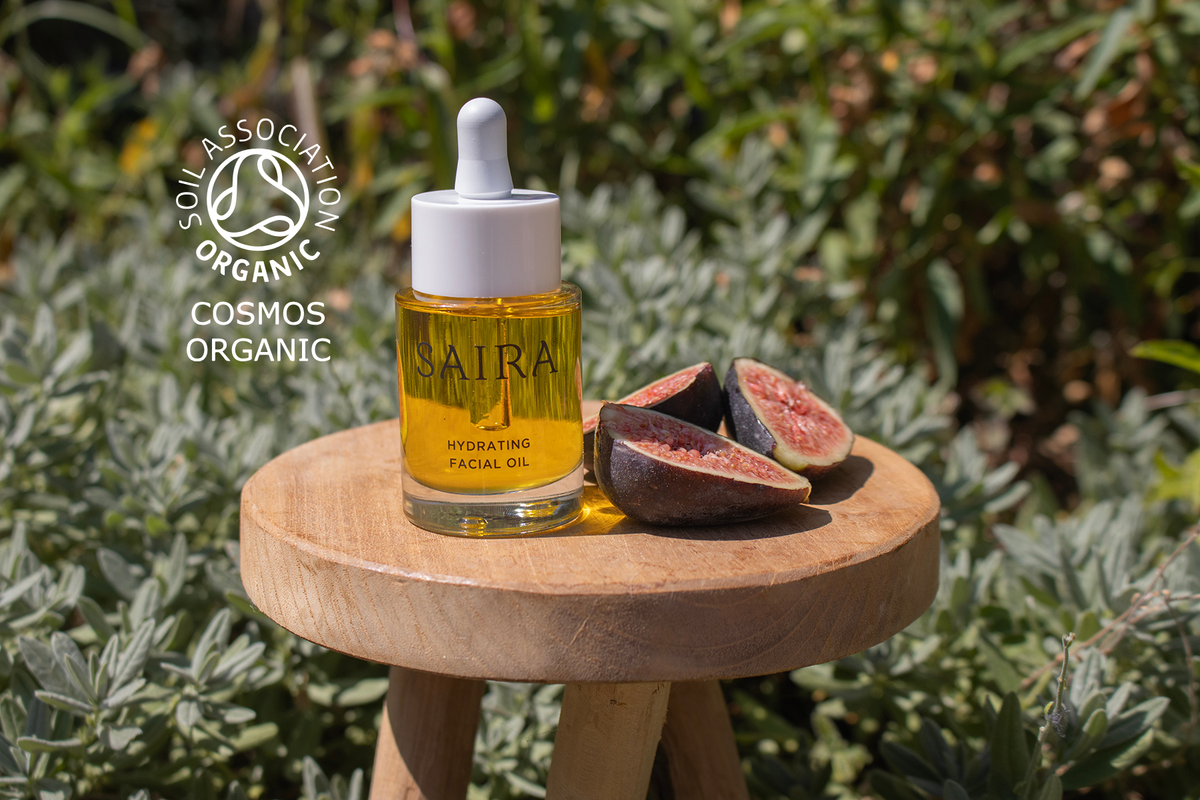
SAIRA answered: It's one of the questions we get asked most, and it deserves a proper answer rather than a marketing soundbite. If you've been searching for organic skincare ingredients to avoid, here's ours in full, with the reasoning behind each one. Most skincare brands are free to formulate with petroleum-derived oils, synthetic fragrance, silicones and conventional preservatives such as phenoxyethanol. Nothing stops them. SAIRA takes a different route. Our skincare is independently certified organic by Soil Association Certification to the COSMOS standard, which means every ingredient, formulation and manufacturing process is checked against strict rules on organic content, environmental impact and responsible sourcing.
That certification is the reason this list exists. Here's exactly what's missing from every SAIRA formula, grouped so it's easy to follow.
Petroleum-derived ingredients
Mineral oil, petrolatum (petroleum jelly) and paraffin are cheap, effective at sealing moisture into skin, and used across the mass market for exactly that reason. They're also by-products of crude oil refining, which sits at odds with organic certification and with the kind of skincare we set out to make. We use plant-derived oils and butters instead, chosen for how they work with skin rather than simply on top of it.
Paraben-free skincare: the preservatives we won't use
Phenoxyethanol and parabens are the most widely used preservatives in conventional skincare. Both are effective, and both are excluded under COSMOS. So are formaldehyde-releasing preservatives such as DMDM hydantoin, and methylisothiazolinone (MI) and methylchloroisothiazolinone (MCI), a preservative pairing that's become common in rinse-off products and has drawn scrutiny from dermatologists over sensitisation in some users. We also leave out EDTA and its salts, used to stabilise formulas, and triclosan, an antibacterial agent once standard in soaps and toothpaste. Formulating without them takes more care and shorter shelf stability. That trade-off is one we've chosen to make.
Fragrance, colour and feel
This is where a lot of conventional skincare gets its polish, and where organic certification draws a firm line. Phthalates, often used to make synthetic fragrance last longer on skin, are excluded, as are synthetic fragrances and synthetic colours and dyes themselves. We also don't use silicones such as dimethicone and cyclopentasiloxane, the ingredients responsible for that silky, almost weightless glide in a lot of mainstream moisturisers, nor PEGs and other ethoxylated ingredients, used as thickeners and emulsifiers. Synthetic antioxidants such as BHA and BHT, added to extend shelf life, are off the list too. Any scent, colour or texture in a SAIRA product comes from the ingredients themselves, not from something added afterwards to fake the effect.
Cleansing agents
Sodium Laureth Sulphate (SLES) and Sodium Lauryl Sulphate (SLS) are the foaming agents behind most cleansers and shampoos. Here's where we want to be precise rather than sweeping: COSMOS doesn't automatically ban SLS in every rinse-off formulation, since it depends on the ingredient's origin and processing. SAIRA's decision not to use it is our own formulation choice, made because it can be drying and irritating for sensitive skin, not something the certification guarantees on our behalf. We think that distinction matters, and we'd rather explain it than let you assume otherwise.
Sourced responsibly
Synthetic microplastics and acrylate polymers, used in some exfoliants and to create a smooth finish in creams, don't break down in the environment and have no place in our formulations. And on palm oil: COSMOS permits palm-derived ingredients only when they come from certified organic or approved sustainable sources. SAIRA goes a step further and uses no palm oil from uncertified or unsustainable sources at all, full stop.
Why this list matters more than the marketing
Anyone can print "clean" or "natural" on a label. Independent certification is what turns that claim into something checkable. Soil Association Certification to the COSMOS standard means an outside body has looked at our ingredient list, our sourcing and our manufacturing process, and confirmed they meet the requirements, not just taken our word for it.
That's the difference we're aiming for as an independent, female-founded British skincare brand built on sustainable skincare ingredients: fewer shortcuts, more scrutiny, and honesty about where our claims come from and where they don't. We'd rather tell you exactly what's missing and why than let "organic" do the talking for us.
If you're building a routine and want to know what's actually in the products you're using, start with the label, and don't be afraid to ask the brand the same question you asked us.
Sources: Soil Association, organic beauty and skincare certification; COSMOS Standard v4.2.


